Which Country Has the Best Coffee in the World?
Ask ten coffee lovers which country grows the best coffee and you'll likely get ten different answers.
None of them would be wrong. Taste is personal, and a single country grows many different coffees. But there is a smaller question we can answer: when people rate the coffee they drink, which countries' coffees do they love most often?
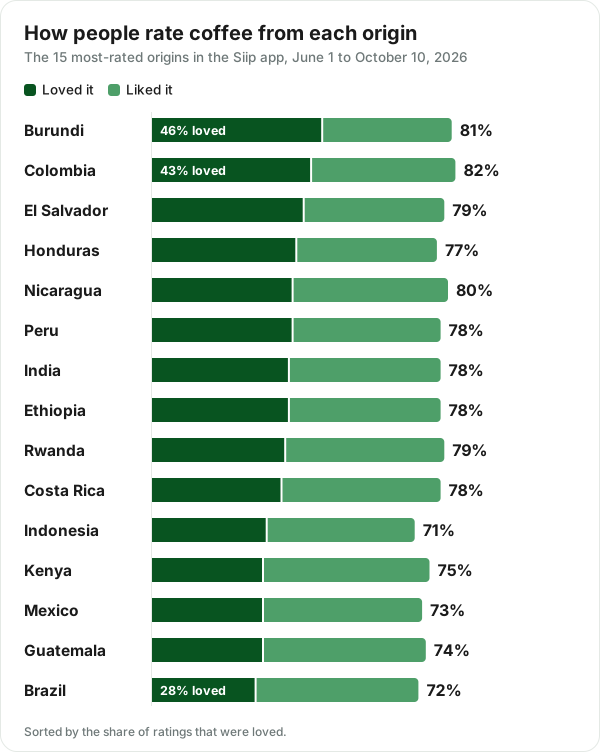
The crowd favorite is Colombia, which has the most ratings on Siip by far and is one of the most loved. Burundi quietly does even better on a much smaller number of ratings, while Brazil, the world's biggest grower, comes last of the 15 origins we looked at. And yet most people's favorite is not Colombia.
The ratings, by origin
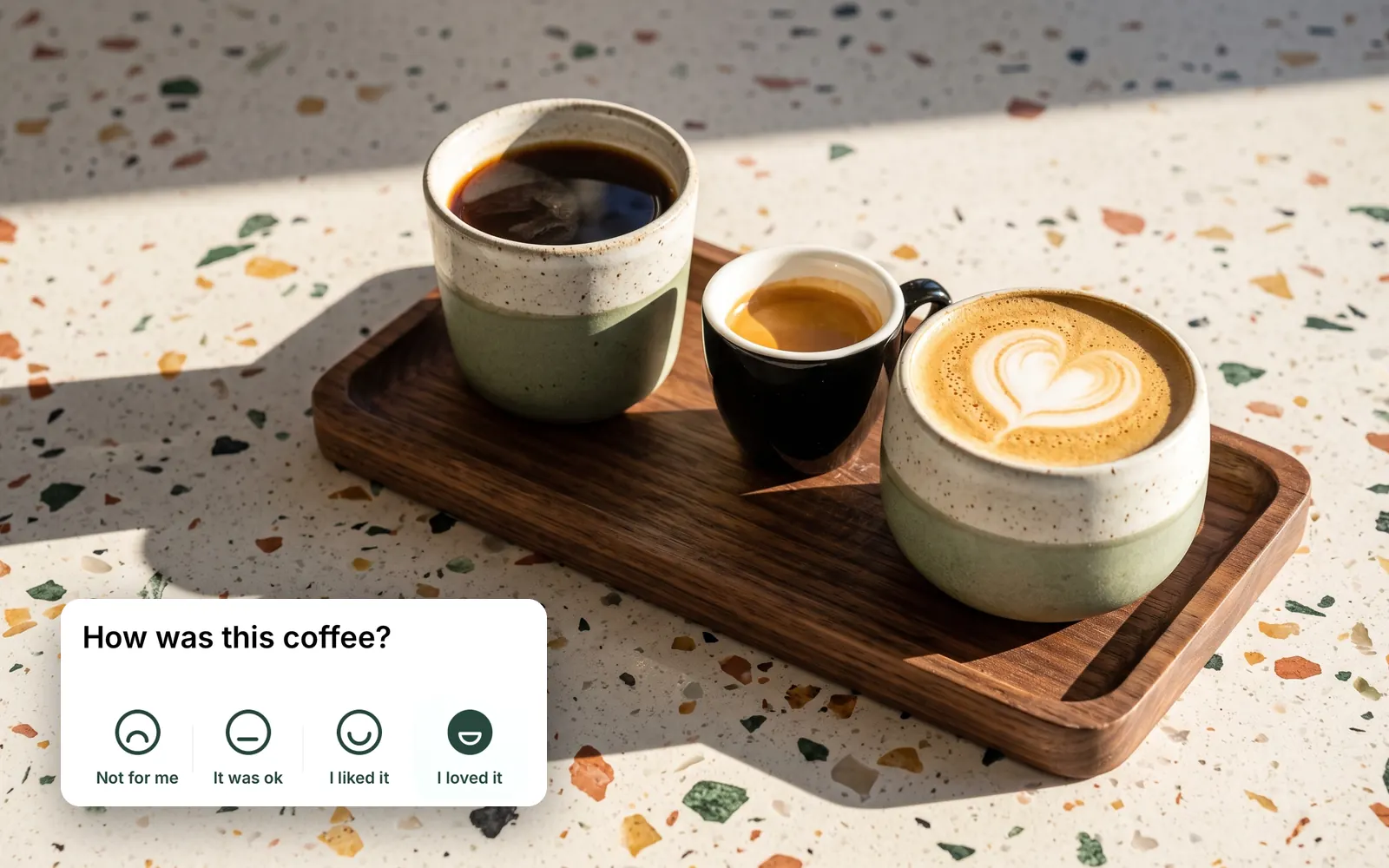
After every coffee, the Siip app asks how it was, with four answers from "not for me" to "I loved it." The chart shows how people answered for the 15 countries they rate most.
Colombia is the crowd favorite
Colombia has more ratings than any other origin, more than twice as many as Ethiopia in second place.
Popular coffees aren't always loved coffees, but this one is both. More than four in five Colombian ratings are liked or loved, the highest of the 15, and it does well at every roast level.
Our read is that Colombian coffee tends to sit in the middle of everything. In Siip's catalog its typical notes are fruit, chocolate and citrus, with medium-high body and acidity. There's something in it for almost every taste.
The small origins near the top
Burundi has the highest share of loved ratings of any origin, with El Salvador, Honduras and Nicaragua close behind.
Each of these has a small fraction of the ratings Colombia has, so we'd treat them as a tip, not a ranking. If you've never tried a coffee from Burundi or El Salvador, the odds are good.
Famous doesn't always mean loved
Kenya is one of the most prized origins in specialty coffee, and it has the highest acidity score in Siip's catalog. Fewer than a third of Kenyan ratings are "I loved it." Most of the Kenyan coffees people rated were light roasts, the roast level people love most, so roast doesn't explain it. Bright, berry-like coffee is a specific taste, and fewer people are looking for it.
Ethiopia, the birthplace of coffee, is the second most-rated origin and lands in the middle of the chart.
Brazil grows more coffee than any other country, more than a third of the world's beans. It's loved least often of the 15 and gets the most low ratings. People do like Brazilian coffee: about seven in ten ratings are liked or loved. They just fall for it less often. Its typical profile is nuts and chocolate with low acidity, which is comforting more than it is surprising.
Your favorite probably isn't at the top
The chart is an average across everyone. Look at people one at a time and the picture changes.
Among people who have rated coffees from several countries, Colombia was the favorite of three in ten, and Ethiopia came second. Even Brazil, last in the chart, was the favorite of about one in twelve. In all, 21 different countries were someone's favorite.
Here's how one rater described a Brazilian coffee:
"Really delicious V60 brew. Very strong chocolatey / coffee smell. Lighter to taste, easy to drink. Sweet and a little acidic."
A Siip rater, on a Brazilian coffee they loved
So the country that's loved least often on average is still somebody's best coffee. The hard part is knowing in advance whether that somebody is you.
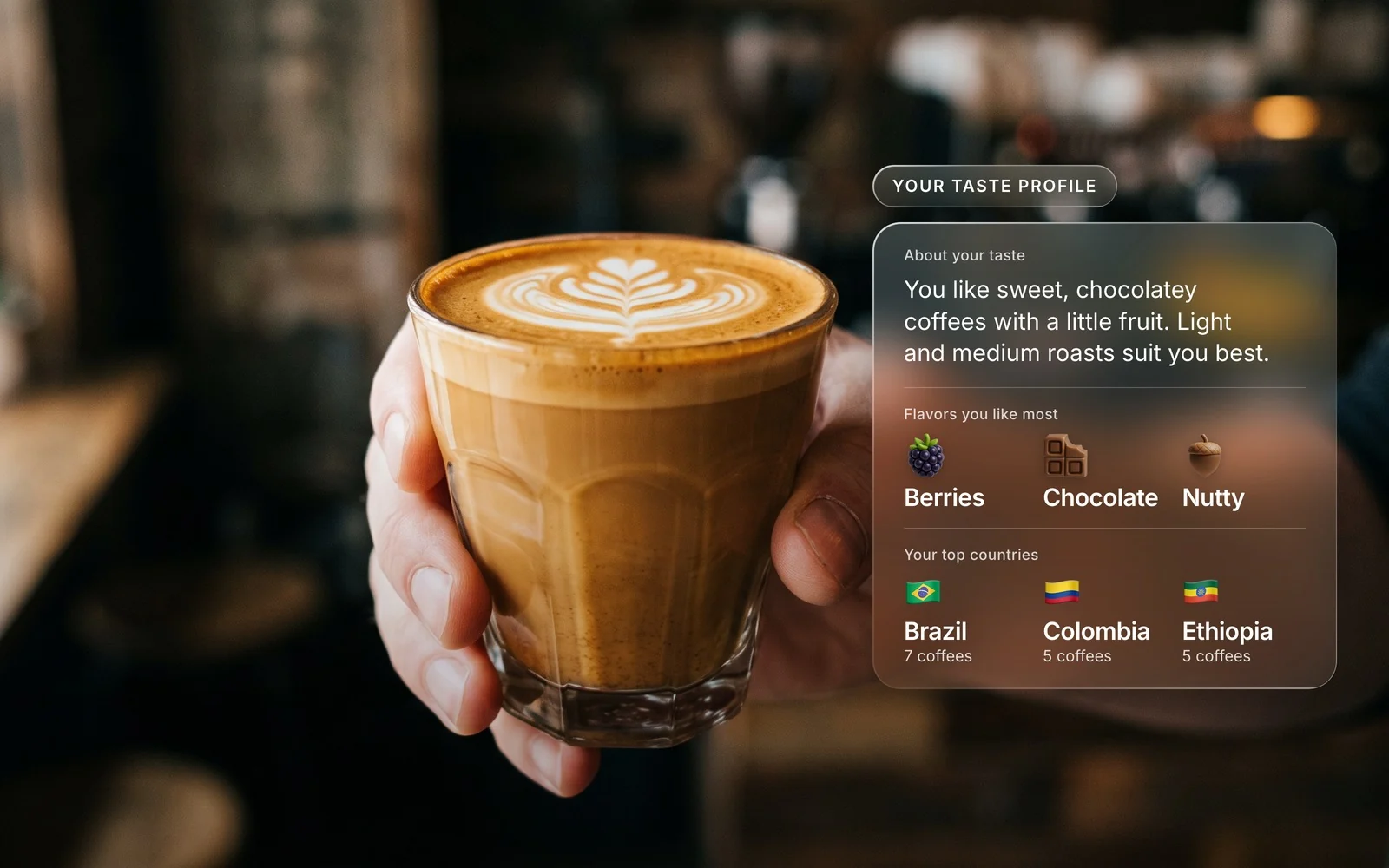
That's what the match score in the Siip app is for. It doesn't rank coffee by everyone's average. It builds your taste profile from your own ratings and scores every coffee you scan against it. It is also how a Siip subscription chooses what to send. When subscribers rated the coffees we sent them in their subscription boxes, they liked or loved 86% of the coffees in their fourth box. Across all coffees rated in the Siip app, that share is 76%.
What to do with this
- Starting out: a Colombian coffee is the safest first bag.
- Want a surprise: try Burundi or El Salvador.
- Curious about Kenya: taste a cup at a cafe before you buy a bag.
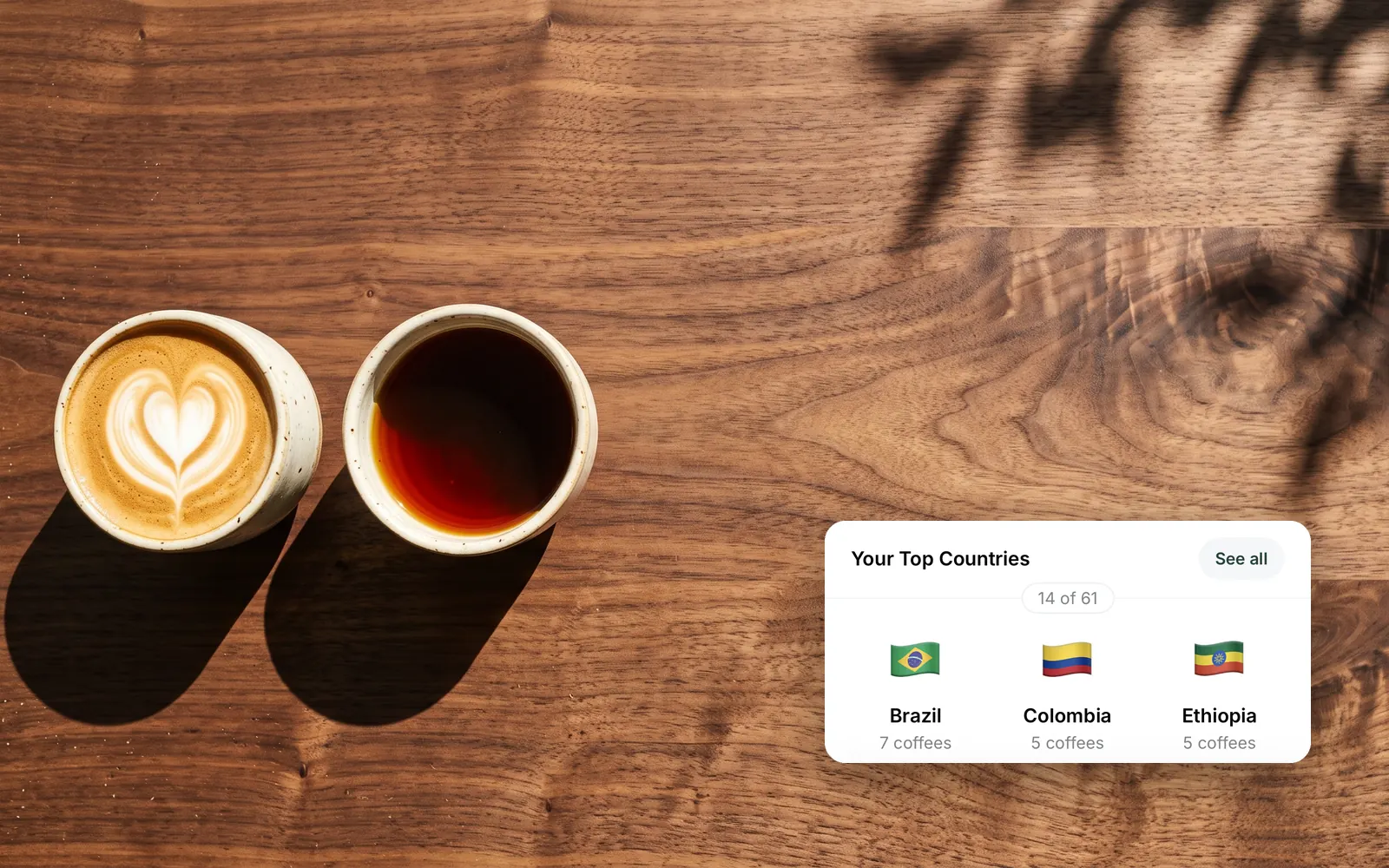
- Already have a favorite: rate it. The Siip app keeps your own top countries, and for 7 in 10 people the top of that list isn't Colombia.
To see where all of these sit on the map, turn the globe in our guide to the coffee belt.
At Siip, we don't think any one country has the best coffee. We think the best coffee is the one you'll genuinely love, wherever it was grown.
Frequently Asked Questions
Which country has the best coffee?
Why is Colombian coffee so popular?
Is Brazilian coffee good?
Which coffee origin should a beginner try first?
Based on ratings in the Siip app between June 1 and October 10, 2026. People chose these coffees themselves, so this is not a blind tasting. Subscription box ratings are from Siip subscribers between April 22 and October 4, 2026. The quote is a note a rater added to their rating, shown as written.